The sweetest and best Of all symphonies is not Songs of concert Nor the cascade or stream Which flow through hills and seas Nor through cuckoo It’s the symphony of laughter Anywhere, of everyone’s Fetters and shackles of the wrist This is the symphony of those fetters and shackles Breaking down. It’s the symphony of applause Whenever, anyone conquer Fear and diffidence on arduous task. This is the symphony of those compulsion and limitations Breaking down.
In my childhood memories mine favourite vacation was my grandmother’s (mother’s mother) home. Every year in summer vacation we go there for months. Lots of childhood memories are there.
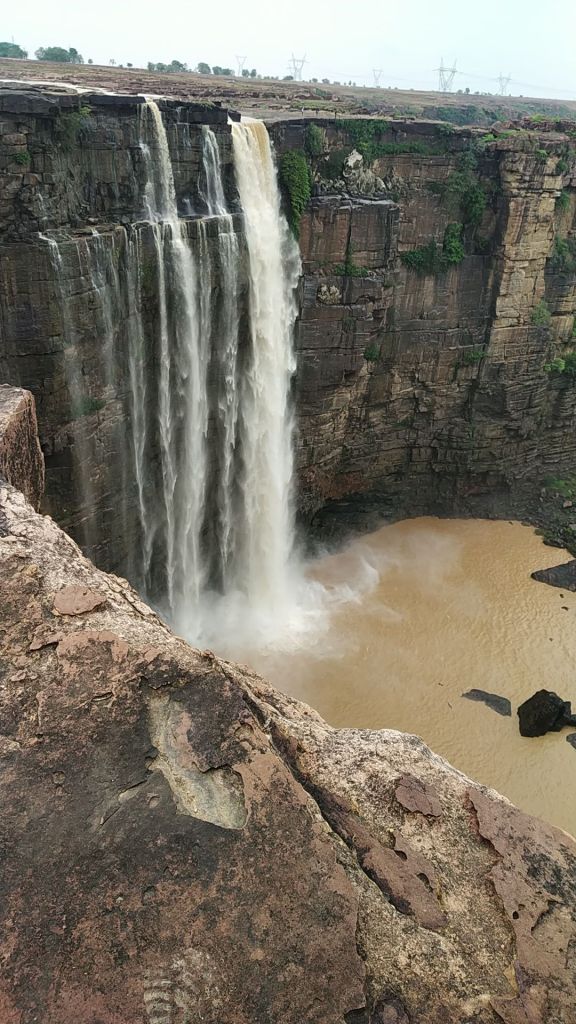
But recently i make a trip to a waterfall in wildlife sanctuary with my friends. Waterfall always attracted me specially sound of falling water. Only that sound distrubing the silence of forest. But peace we got there was incredible. Its really heal my soul.
Two soul Love enrol Gift rose bowl Eyes play role They lost whole.
We all deserve a calm love. The kind that brings peace and comfort, not chaos and confusion. It’s a love that feels like a safe haven, where you can be yourself without fear. A love that supports you, understands you, and stands by you through thick and thin. We deserve a love that makes life feel a little bit easier, a little bit brighter.
We all need a clean fresh environment to live. Effect of pollution will increasing the global warming day by day. And global warming effect the climate. World need the environment as before industrial revolution starts in 18th century. Well, the fact is that the environment is much more affected than any of us know. Controlling pollution will reduce health hazards, liability risk, economic losses, and provide us with clean air, better lifestyle, clear visibility, safe environment for all inhabitants of the Earth and so on.
We all have the responsibility to provide better condition of environment to upcoming generation. Multiple efforts have been taken by the governments of various countries and organizations around the world to reduce the effects of pollution on our environment.
One of the initiatives taken by the United Nations is the United Nations Environment Programme with the mission to inspire people all around the world, to work together, to care for the environment, and take steps to improve the quality of life, not just for ourselves, but for the future generations as well.
The United Nations has also designated June 5 of every year to be World Environment Day in order to bring representatives of all member nations together to address the environmental problems, to create awareness and to instigate action.
The answer to all the environmental problems the world is facing today is immediate action and consistency in reduced usage of private transportation, machinery with possible carbon emission and proper disposal of waste to start with.
Are there things you try to practice daily to live a more sustainable lifestyle?
OkYoga is essentially a spiritual discipline based on an extremely subtle science, which focuses on bringing harmony between mind and body. It is an art and science of healthy living.
Yoga is an ancient and complex practice, rooted in Indian philosophy. It began as a spiritual practice but now a days become popular as a way of promoting physical and mental well-being.
The word ‘Yoga’ is derived from the Sanskrit root ‘Yuj’, meaning ‘to join’ or ‘to yoke’ or ‘to unite’. As per Yogic scriptures the practice of Yoga leads to the union of individual consciousness with that of the Universal Consciousness, indicating a perfect harmony between the mind and body, Man & Nature.
Although classical yoga also includes other elements, yoga as practiced in the United States typically emphasizes physical postures (asanas), breathing techniques (pranayama), and meditation (dyana).
Kids of new generation prefer electronic gadgets instead of paying outdoor games. Too much gadget use introduces depression in upcoming generation of certain ages. It also leads mental health issues in children in childhood and adolescence.
Not only kids, adults also have preference more for electronic gadgets instead of doing physical activities. They may act depressed or we can see worst of these symptoms in a couple of days. This is one of the biggest problems in this growing world of technology.
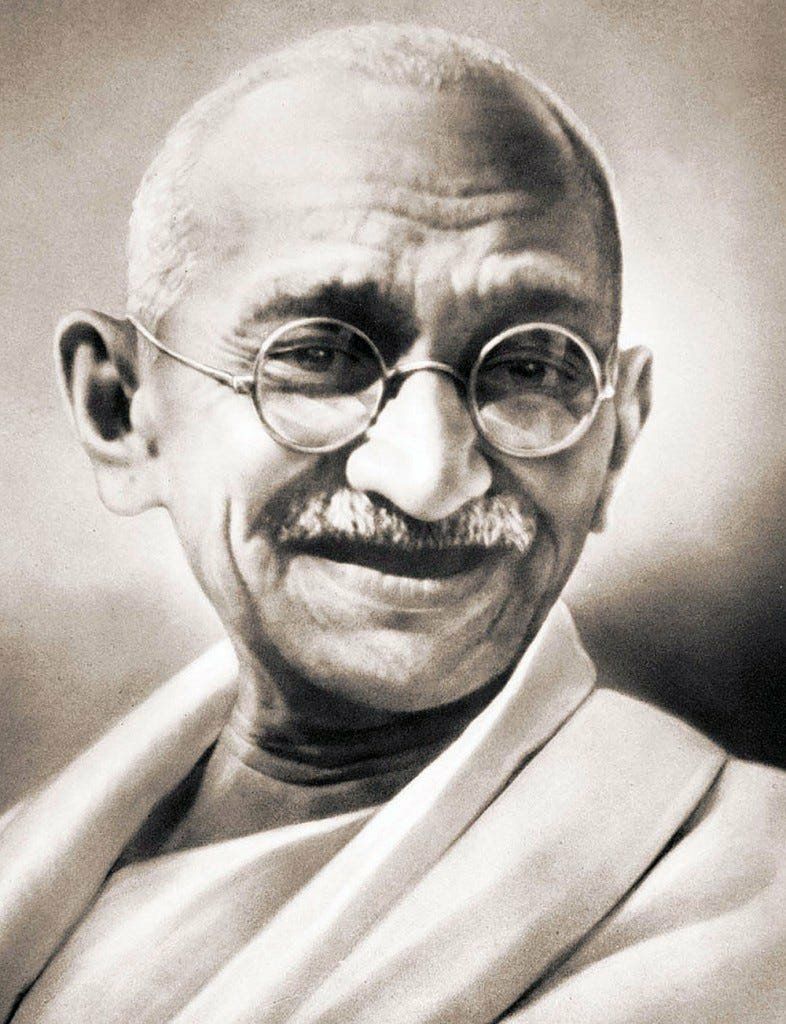
Gandhi ji inspired movements for civil rights and freedom across the world. He is also one of the rare leaders from India in whose name over 100 countries are expected to release commemorative stamps.
The base of Gandhian philosophy is the spiritual or religious component. He was a firm believer in God.
He was also a believer in humanity.
He believed that human nature is good. He considered all people are capable of moral development.
Gandhian Philosophies are as follows
1. Truth and Non violence- Mahatma Gandhi focuses on living a philosophy of satya (truth) and ahimsa (nonviolence). Gandhi’s primary concern is with developing moral character and practice and with ethics as first philosophy.
2. Satyagraha, the concept was introduced in the early 20th century by Mahatma Gandhi and designated a determined but nonviolent resistance to evil. The supreme idea of truth naturally leads to the Gandhian ideology of Satyagraha. Protecting the standards and tenets of truth is essential if it is the ultimate reality. God, who is the utmost truth and reality, requires a votary who is completely compassionate and unselfish.
3. Sarvodaya is a term meaning ‘universal uplift’ or ‘progress of all’. It was coined by Gandhi in 1908 as a title for his translation of John Ruskin’s Unto This Last. The Sarvodaya Movement has as its target the establishment of a whole network of such self-supporting village communities.
4. Swadeshi, which means “of one’s own country,” can be loosely translated as “self-sufficiency” in most settings. Gandhiji asserts that the Charkha has the distinction of being able to address the issue of economic distress in a way that is most logical, straightforward, affordable, and professional. It stands for both the wealth and freedom of the country. It represents commercial peace rather than commercial strife.
5. Trusteeship is a key component of Gandhian economics that could be called the nonviolent equivalent of ownership. The idea was taken from English law by Gandhi. It denotes that one is a trustee rather than the owner of their belongings, including eventually their skills or abilities.
He professed the philosophy of Hindu Universalism (also see Universalism), which maintains that all religions contain truth and therefore worthy of toleration and respect. It was articulated by Gandhi:
“After long study and experience, I have come to the conclusion that all religions are true all religions have some error in them; all religions are almost as dear to me as my own Hinduism, in as much as all human beings should be as dear to one as one’s own close relatives. My own veneration for other faiths is the same as that for my own faith; therefore no thought of conversion is possible.” Gandhi believed that at the core of every religion was truth (satya), non-violence (ahimsa) and the Golden Rule.
Gandhi’s ideas on governance. Gandhi’s utopian “Ramrajya”, his perfect state, was different. It didn’t require a constitution, an elected government, a military or a constabulary.
The system of capitalism, Communist rule, abuse, and religious violence wouldn’t exist. Instead, the nation was to be fashioned after ancient India. The philosophy of Mahatma Gandhi advocates for a traditional, moral, and apolitical state. Swaraj emphasizes the need to foster individual and collective self-governance. Swaraj is linked to the capacity for aim self-evaluation, ongoing self-purification, and increasing self-reliance at the individual level.










 Rang-Rivaz