What’s a song lyric that has stuck with you forever?
This is preamble of the constitution of India.
WE, THE PEOPLE OF INDIA, having solemnly resolved to constitute India into a SOVEREIGN SOCIALIST SECULAR DEMOCRATIC REPUBLIC and to secure to all its citizens: JUSTICE, social, economic and political; LIBERTY of thought, expression, belief, faith and worship; EQUALITY of status and of opportunity; and to promote among them all FRATERNITY assuring the dignity of the individual and the unity and integrity of the Nation; IN OUR CONSTITUENT ASSEMBLY this 26th day of November, 1949, do HEREBY ADOPT, ENACT AND GIVE TO OURSELVES THIS CONSTITUTION
Life, which had been following the same monotonous routine for quite some time, found a new outlet in this GenZ protest. As if my solitude had found a new companion.
The priorities of my hectic daily life had shifted completely; amidst all my tasks, my heart and mind remained constantly focused on Jantar Mantar.
The enthusiasm and courage of these young people kept inspiring me. They continued to struggle, hoping for a ray of new hope.
I did not become a direct participant in this protest, but it reopened some of the suppressed wounds of my heart.
I cried several times that night while watching videos and reels from the day baton charge on students and tear gas shells were fired.
However, this did not dampen the GenZ’s spirits instead, students began joining in even greater numbers, and their methods of protest became more creative.
Some lighthearted moments during the protests made me laugh, and seeing the children’s enthusiasm filled me with pride, despite facing so many hardships, they are standing firm.
Finally, the government had to bow to GenZ’s fearless courage, and their demands were accepted.
Today, I can say that democracy is still alive in my country. The youth of my country are capable, sensible, and fearless. Heartiest congratulations to them on this victory; they truly deserved it.
रहे हमपे करम तेरा इतना धन धान्य भरी हो ये दुनिया नित नया सवेरा खुशियों का हो प्रेम से उर्जित ये दुनिया
है आकांक्षा यही मेरे मन आयी हो ध्यान योग से अरुणाई संतोष की गागर से हो सदा समृद्ध रहे ये जीवन मेरा तेरा ध्यान रहे प्रतिदिन इतना हर शोक से मुक्त हो ये दुनिया रहे हमपे……………………
रहे अविरल नदियों की बहती धारा वृक्षो से लहराये धरती का अंगना यहा मिले सबको एक नयी दिशा ना जन मानस मे हो भेद यहा तेरा आशीष रहे हमपर इतना हर अभिशाप से मुक्त हो ये दुनिया रहे हमपे……………………….
बहती है शाश्वत सरिता प्रभु निर्विघ्न निरंतर तेरे नाम की करती है कलरव पक्षिया भी मधुरं भगवन तेरे शान की रहे सुमिरन तेरा मन मे इतना सुख समृद्ध भारी हो ये दुनिया रहे हमपे……………………
Translated version
May Your grace remain upon us so much, That this world be filled with wealth and grain. Each new dawn be a morning of joy, May this world be energized with love.
This is the aspiration that has arisen in my heart. May dawn’s crimson come through meditation and yoga. From the vessel of contentment may it always be, That my life remains prosperous eternally. May Your remembrance stay daily within, May this world be freed from every sorrow. May Your grace remain upon us…
May the rivers flow endlessly, May the earth’s courtyard sway with trees. Here may everyone find a new direction, And no divisions dwell in human minds. May Your blessing remain upon us so much, That this world be freed from every curse.
May Your grace remain upon us…The eternal stream flows, O Lord, Unhindered, unbroken, in Your name. The birds too sing in chorus, Sweet Lord, in praise of Your glory. May Your remembrance remain so deep in the heart, That this world be heavy with joy and prosperity. May Your grace remain upon us…
If you could have dinner with any fictional character, who would it be?
Rocket is a funny, dangerous, and clever raccoon hero who uses technology and weapons to fight enemies. He may look small, but he is one of the most important and memorable characters in Marvel.
Rocket is sarcastic, blunt, funny, and very smart, but he also has a soft side he doesn’t show easily. He’s the kind of person who would tease you first and help you second, especially if you earn his trust.
Democracy in India has always been shaped not just by ballots, but by voices raised in protest, by the courage of ordinary citizens who refuse silence.
When the youth step forward, they remind the nation that democracy is not a static monument but a living flame, one that must be tended, challenged, and renewed.
This protest becomes more than an event, it becomes a page in history where bravery met conviction. No matter how hard the government tried to suppress the voice, it failed in front of youth.
Such moments echo the spirit of earlier generations who fought for freedom, showing that democracy thrives when people dare to speak truth to power.
Article 19(1)(a) and 19(1)(b) of constitution give rights to protect freedom of speech and peaceful assembly, making protest a legitimate, protected form of democratic participation. However, this government wanted to snatch away these rights, but the youth stood their ground.
What’s a movie or book that inspired you to travel?
South Asia has emerged in recent years as ground zero of Gen Z protests with India’s neighbouring Bangladesh, Sri Lanka and Nepal seeing mass protests and the toppling of unpopular governments.
India has the world’s largest Gen Z cohort, which has been facing unemployment, record-high inequality and religious tensions since 2014, coupled with the country’s slide in multiple democratic indices.
Thousands of protesters, most of them students, are expected to march to India’s Parliament from a protest site in the heart of the national capital to demand the resignations of Prime Minister Narendra Modi and his education minister.
For nearly a month, supporters of the viral “cockroach” movement have occupied New Delhi’s Jantar Mantar area, India’s most popular protest site, located a couple of kilometres from parliament.
After back-to-back scandals related to examination paper leaks, technical glitches and cancelled tests triggered outrage in the world’s most populous country. This event inspired me to towards the protest site in the support of student.
If you could erase one trend from history, what would it be?
Polygamy, defined as having more than one spouse, particularly more than one wife, is prohibited for Hindus under the Hindu Marriage Act of 1955. However, classical Hindu scriptures contain numerous instances of polygamy and do not explicitly mandate monogamy.
Manusmriti, one of the most influential Dharmashastras suggests that if a wife was unable to bear children, was chronically ill or was otherwise unable to fulfill certain domestic duties, the husband might be permitted to take another wife. And for a woman, there was no other option after marriage.
It is true that polygamy has existed in Indian society for a long time, and while it is now illegal, it is still practiced in some areas. The practice of polygamy is not unique to any one religion or culture and has been justified in the past for various reasons. However, as society has evolved, the justifications for polygamy are no longer valid, and the practice should be abandoned.
Article 14 of the Constitution guarantees equal treatment and protection under the law to every individual within the territory of India. The state is prohibited from discriminating against any person based on their religion, ethnicity, gender, or place of birth, according to Article 15(1) of the Constitution.
Which outdated technology do you miss the most, and why?
One evening, as the monsoon winds rattled the windows, I saw this vintage hand video game and picked it up. The game flickered to life, and suddenly the beeps weren’t just sounds they were summons. Those childhood memories like returning home drenched in torrential rain, yet filled with the joy of victory.
Each console wasn’t just a machine it was a portal of memory, carrying the laughter of friends, the quiet nights under blankets, and the thrill of victories won in solitude. Who knows how many new records were set every day, I was the only witness to all of them.
When i finally set the handheld down, the rain had stopped. The silence of the room was filled with a strange warmth. Thats realisation these games weren’t about pixels or batteries they were about companionship across time, tiny machines that carried whole universes in the palm of a hand.
Do you think we’re shaped more by our experiences or by who we are?
The 59-year-old engineer, education reformer, and climate activist from Ladakh, India had begun his indefinite fast on June 28, joining a campaign led by the Gen Z, a youth-led satirical movement demanding the resignation of Union Education Minister Dharmendra Pradhan over the leak of the NEET-UG medical entrance examination question paper.
Sonam Wangchuk lay on a makeshift stage at Delhi’s Jantar Mantar, surrounded by medics, his voice reduced to a near-whisper, 18 days into a hunger strike on water alone. He had lost more than 8 kilograms.
Chief Justice of India Surya Kant, who referred to some activists and unemployed youth as “cockroaches” and “parasites of society” in an open court hearing. The CJP’s (cockroach janta party) social media led compain, protest at Jantar Mantar no Union government official had met the protesters or issued any direct response.
Even the British used to respond to these kinds of hunger strikes in the past. But now, a Ramon Magsaysay Award recipient is sitting on a hunger strike, and his own government is unwilling to hear him out.
If you had to be an animal for a week, which one would you be and why?
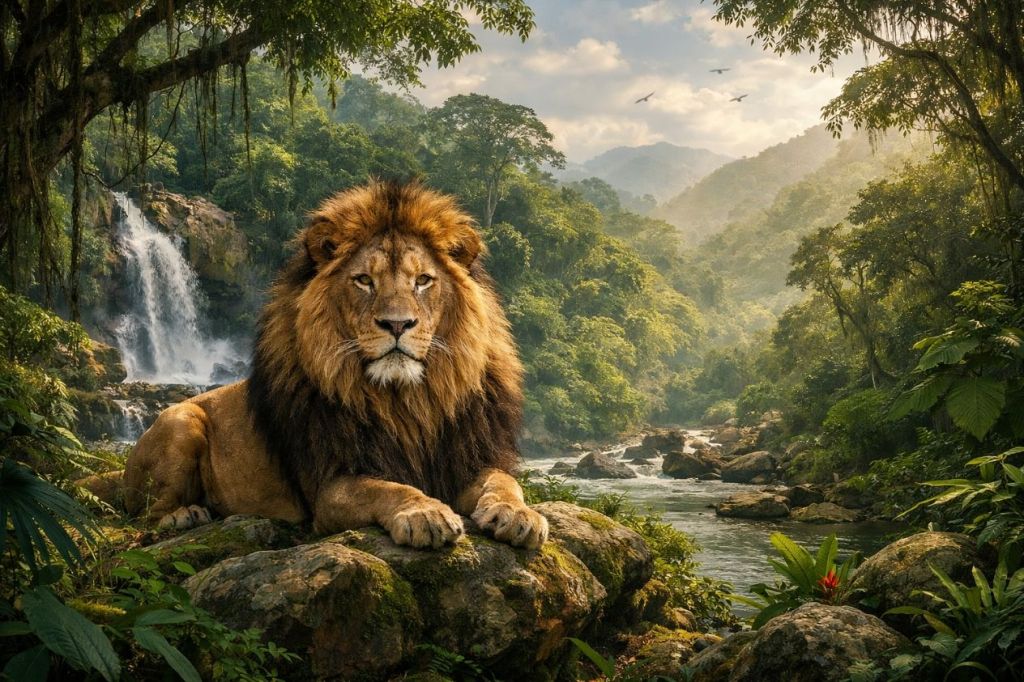
What a magnificent experience it would be to be a lion, needing no material possessions, simply living blissfully amidst nature. Caring for the natural world and lounging around contentedly. Hunting when hungry and then relaxing or sleeping, without a single worry about anything else.
Lions are apex predators that maintain balance in ecosystems, drive tourism economies, and embody strength and leadership in human culture. Set the example of courage and bravery for humans. Their survival ensures healthier landscapes, biodiversity, and even climate resilience.